
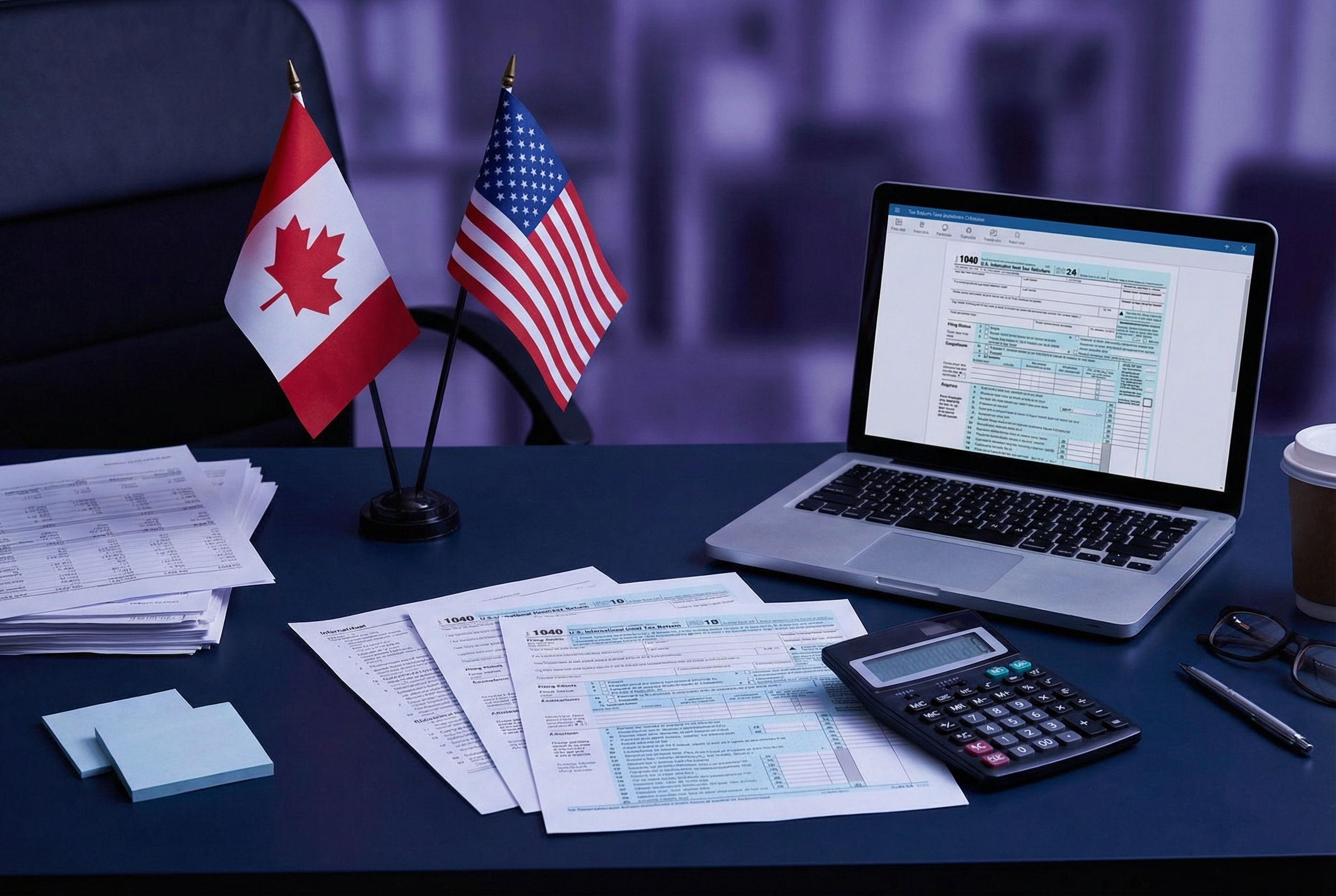
Most Miami small business owners overpay their federal taxes. Not because the tax code is unforgiving, but because they miss deductions they are legally entitled to claim. The gap between what a business owner thinks is deductible and what actually qualifies is where thousands of dollars disappear every year.
This is not about aggressive tax positions or audit risk. These are standard, well-documented deductions that the IRS expects qualifying businesses to claim. The issue is that many owners rely on bookkeeping software to auto-categorize expenses, which captures the obvious costs but misses the deductions that require judgment, documentation, or strategic structuring.
Here are the most commonly missed deductions for small businesses operating in Miami and South Florida.
Why Miami Businesses Leave Money on the Table
Three patterns account for most missed deductions. First, business owners do not track expenses in enough detail. A credit card statement that shows "Amazon" does not tell a CPA whether the purchase was office supplies, inventory, or personal. Second, owners do not claim deductions they qualify for because they are not aware they exist or fear triggering an audit. Third, accounting software does not flag deductions that depend on eligibility criteria, such as the home office deduction, the QBI deduction, or retirement plan contribution limits.
Home Office Deduction
If you operate your business from a home office in Miami, you can deduct the expenses associated with that space. The requirement is straightforward: the space must be used regularly and exclusively for business. A dedicated room or a defined area within a room qualifies. A kitchen table where you sometimes work does not.
The regular method calculates the deduction based on the percentage of your home used for business. If your home is 2,000 square feet and your office is 200 square feet, 10% of your mortgage interest, property taxes, utilities, insurance, and maintenance becomes deductible.
The simplified method allows $5 per square foot up to 300 square feet, for a maximum deduction of $1,500. This avoids the record-keeping burden but may undervalue the deduction for larger home offices.
Vehicle and Transportation Expenses
Business-related driving is deductible using either the standard mileage rate or the actual expense method. The standard mileage rate for 2024 is 67 cents per mile. For a Miami business owner who drives 12,000 business miles per year, that is $8,040 in deductions.
The actual expense method may yield a larger deduction for owners with newer or more expensive vehicles. It includes gas, oil, tires, repairs, insurance, registration, depreciation, and lease payments, prorated by business use percentage.
The critical requirement is documentation. The IRS requires a contemporaneous mileage log that records the date, destination, business purpose, and miles driven for each trip. Mobile apps such as MileIQ or Everlance automate this tracking.
Not sure if you are capturing every deduction? TYM Consulting offers tax deduction reviews for Miami small businesses. Schedule a session with a CPA.
Health Insurance Premiums for Self-Employed Owners
Self-employed business owners can deduct 100% of health insurance premiums for themselves, their spouse, and their dependents. This is an above-the-line deduction, meaning it reduces adjusted gross income directly. It applies to medical, dental, and qualifying long-term care insurance.
This deduction is frequently missed because it does not appear on Schedule C. It is claimed on Schedule 1 of the personal return, which means the bookkeeping software tracking business expenses will not flag it.
Retirement Plan Contributions
Small business owners have access to retirement plan structures that provide significantly higher contribution limits than a standard IRA. A SEP-IRA allows contributions up to 25% of net self-employment income, to a maximum of $69,000 in 2024. A Solo 401(k) allows an employee deferral of $23,000 (or $30,500 for those 50 and older) plus an employer profit-sharing contribution of up to 25% of compensation.
These contributions are tax-deductible and reduce both income tax and (in some cases) self-employment tax. A Miami consultant earning $200,000 who contributes $50,000 to a Solo 401(k) reduces their taxable income by that amount, potentially saving $15,000 or more in federal taxes.
Meals and Entertainment After Recent Tax Law Changes
The 100% deduction for restaurant meals that applied in 2021 and 2022 has expired. Business meals are now 50% deductible, provided the meal involves a business discussion, the expense is not lavish or extravagant, and the taxpayer or an employee is present.
Entertainment expenses (sporting events, concerts, golf) are not deductible under current law, even if business is discussed.
Professional Services and Software
Fees paid to accountants, attorneys, consultants, and other professionals for business purposes are fully deductible. This includes CPA fees for tax preparation and advisory, legal fees for contract review and business formation, marketing and advertising costs, and business software subscriptions (accounting, CRM, project management, design tools).
Florida-Specific Deductions and Considerations
Miami business owners face unique expenses that are fully deductible when properly documented. Annual Florida LLC or corporation filing fees and Sunbiz registration. Local business tax receipts required by Miami-Dade County. Hurricane preparedness expenses, including generators, storm shutters, and emergency supplies used for business continuity. Flood and wind insurance premiums, which are significantly higher in South Florida than national averages.
Florida does not impose a state income tax on individuals, which means there is no state deduction for business income. However, Florida C Corporations do pay a state corporate income tax at 5.5%, and business expenses that reduce federal taxable income also reduce the Florida corporate tax base.
The Section 199A Qualified Business Income Deduction
Pass-through business owners (sole proprietors, S Corp shareholders, partnership members) may qualify for a 20% deduction on qualified business income under Section 199A. For a Miami business owner with $250,000 in qualified business income, this deduction could reduce taxable income by $50,000.
The deduction phases out for certain service businesses (law, accounting, consulting, health) when taxable income exceeds $191,950 (single) or $383,900 (married filing jointly) for 2024. Proper planning around the threshold, including retirement contributions and other income adjustments, can preserve the full deduction.
How a CPA Review Catches What Software Misses
Bookkeeping software records transactions. A CPA evaluates whether each transaction is classified, timed, and documented in the way that produces the best tax outcome. The difference between a DIY return and a CPA-prepared return for a Miami small business with $300,000 in revenue is typically $5,000 to $15,000 in additional deductions identified.
Every dollar of missed deduction is a dollar of unnecessary tax. Schedule a tax review with TYM Consulting to make sure your Miami business is capturing every deduction available.